

The Real Cost of Using the Wrong Valve
Every plant manager knows the feeling. You budget for scheduled maintenance, but a valve fails long before expected. Production slows or stops. Spare parts must be sourced. Maintenance teams are pulled into reactive work. In many cases, the total cost of that single failure — labour, replacement parts, and lost throughput — ends up being far greater than the valve’s original purchase price.
In South African mining, wastewater treatment, pulp and paper, and chemical processing, this cycle often comes down to one issue: using a valve that was never designed for the service conditions it faces.
Slurry is not simply dirty water. It is a moving mixture of liquid and suspended solids that may include abrasive particles, fibrous material, grit, or grain. Over time, that combination can wear, clog, and damage valve internals with every operating cycle. Understanding why conventional valves fail in slurry service is the first step toward making better valve selection decisions.
What Makes Slurry So Destructive
Slurry service varies from plant to plant, but the common problem is the same: suspended solids moving through a valve create a much harsher operating environment than clean liquid or gas service.
Erosion of Internal Components
Abrasive particles do not pass harmlessly through a valve body. They strike seat faces, gate surfaces, and body walls repeatedly during operation. In conventional valves designed mainly for cleaner service, seating surfaces can wear quickly when exposed to abrasive solids. As wear progresses, shut-off performance declines and leakage becomes more likely.
Solids Accumulation in Body Cavities
Many conventional valve designs include cavities or void spaces around the gate, disc, or seat area. In slurry service, solids can settle and compact in these spaces. Over time, that buildup can interfere with full closure, increase operating torque, and make the valve progressively harder to actuate.
Fibrous Media and Clogging
In pulp and paper applications, sugar processing, and some wastewater streams, the challenge is not only abrasion but also fibrous material. Cellulose fibre, plant matter, and stringy solids can collect around stems, seat areas, and internal obstructions. Valve geometries with restriction points give fibrous media a place to catch and build up.
Why the Problem Often Gets Worse Over Time
Once erosion or solids buildup begins, the valve’s condition usually deteriorates faster. Worn surfaces can increase turbulence and localised wear. Damaged seating areas allow process media to pass where it should not, accelerating erosion further. A valve that appears manageable during early service can degrade rapidly once wear reaches a certain point.
The False Economy of Light-Service Valves in Slurry Applications
A common response to repeated failure in slurry service is to install lower-cost valves and replace them more often. On paper, this may appear to reduce capital cost. In practice, it often increases the total cost of ownership once labour, downtime, emergency callouts, and replacement frequency are considered.
In many plants, an illustrative comparison shows the pattern clearly: a lower-cost valve may seem attractive upfront, but if it requires repeated replacement and creates unplanned maintenance events, the long-term spend can exceed that of a purpose-built slurry valve by a wide margin. The exact saving depends on valve size, line criticality, solids loading, and maintenance intervals, but the principle is consistent — repeated failure is expensive.
What a Purpose-Built Slurry Valve Must Do
A valve designed specifically for slurry service should address the most common failure modes found in abrasive and solids-laden duties. At a minimum, it should offer:
- A cavity-free body design that reduces spaces where solids can accumulate
- A shearing gate action that helps cut through solids during closure
- An auto-cleaning function that helps clear the seat area during actuation
- A removable or replaceable seat that simplifies maintenance
- Material options suited to the abrasiveness and chemistry of the process media
- A flow path that minimises unnecessary restriction and helps reduce wear
These are not luxury features. In demanding slurry applications, they are practical engineering requirements for reliability.
The Lenor DK Slurry Knife Gate Valve: Built for Demanding Duty
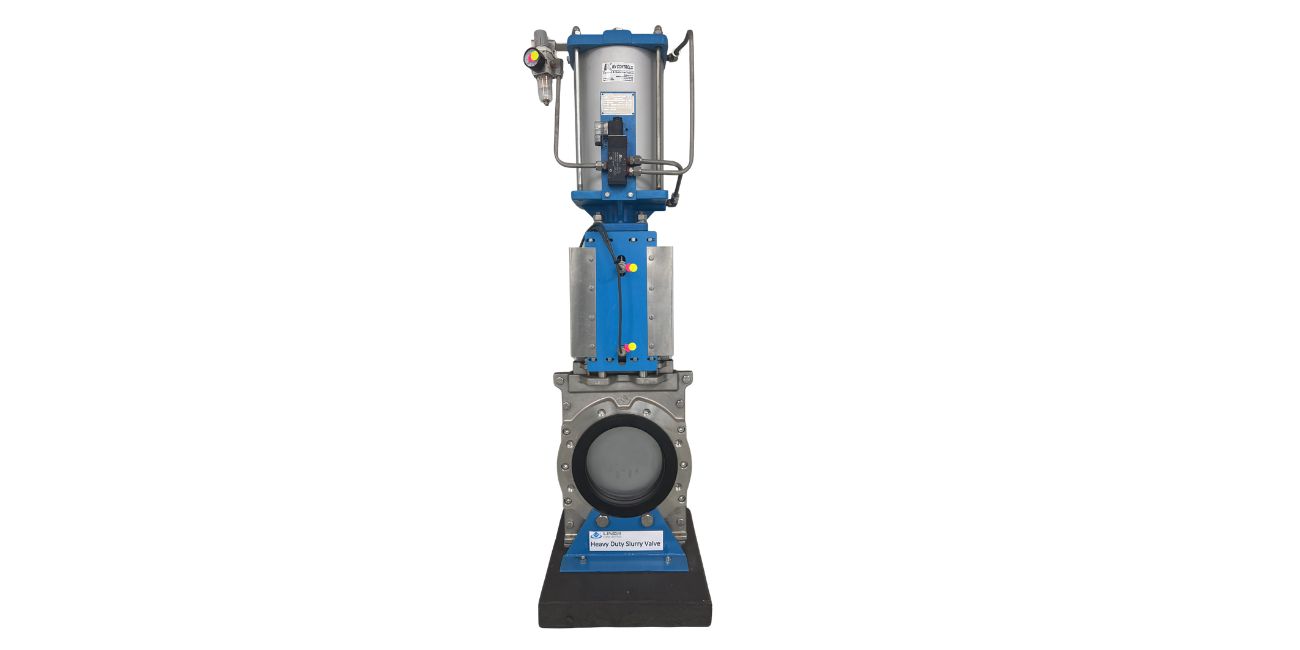
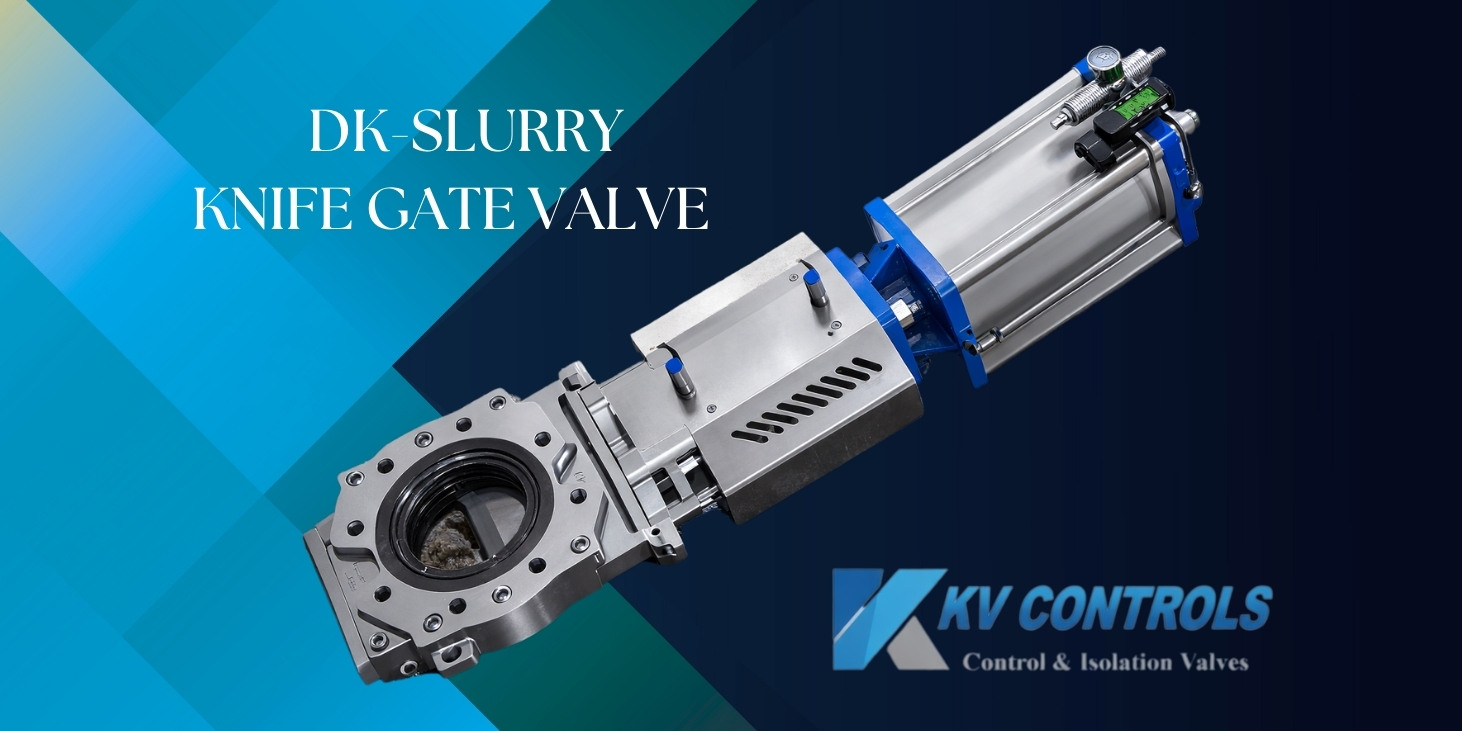
The Lenor DK Slurry Knife Gate Valve, supplied by KV Controls, is designed around these requirements. Its two-piece cavity-free body helps reduce solids accumulation. The gate provides shearing force with an auto-cleaning function to help prevent buildup at the seat area during operation. The removable seat supports easier maintenance when wear eventually occurs.
Available from DN80 to DN800, with soft-seat Class VI tightness and body material options including WCB, CF8, CF8M, and CF3M, the DK valve covers a wide range of industrial duties where slurry, stock, fibre, dust, or grain are present.
KV Controls supplies knife gate valve solutions for industrial applications across South Africa, including slurry, pulp, wastewater, and other high-solids duties. Whether the requirement is manual handwheel operation, gearbox operation, pneumatic actuation, or electric actuation, the DK series can be configured to suit the application.
Industries That Face These Challenges Daily
The slurry valve problem is not limited to one industry. Across South African mining operations, lines handling tailings, cyclone feed, concentrate transfer, and thickener underflow often face these wear patterns. Wastewater treatment plants dealing with sludge handling and solids-laden streams experience similar problems. Pulp and paper mills, sugar producers, and parts of the chemical and water sectors also depend on valves that can tolerate abrasive or fibrous media more effectively than standard designs.
KV Controls works with engineering teams and procurement managers across these sectors from its offices in Sasolburg, Cape Town, Richards Bay, and Jeffreys Bay, offering application-based valve support rather than a one-size-fits-all catalogue approach.
Making the Right Selection Decision
Valve selection for slurry service involves more than matching line size to a product code. The correct choice depends on solids content, particle characteristics, process chemistry, pressure, temperature, actuation requirements, and the maintenance strategy of the plant.
KV Controls’ technical team reviews these factors and recommends valve configurations suited to actual operating conditions. That kind of application support helps reduce repeat failures, avoid unnecessary maintenance spend, and improve shut-off reliability on difficult lines.
For a closer look at the engineering behind the Lenor DK Slurry Knife Gate Valve, read the next article in this series: Part 2 – DK Slurry Valve Engineering Explained.
To discuss your slurry valve requirements, contact the KV Controls team or download the Lenor DK valve datasheet from the KV Controls downloads page.
FAQS
Q: What makes a slurry knife gate valve different from a standard gate valve?
A: A standard gate valve is generally intended for cleaner service. A slurry knife gate valve is designed for more difficult duties and typically includes features such as a sharpened gate, a cavity-free body, and seat designs better suited to abrasive or solids-laden media.
Q: What industries in South Africa require slurry knife gate valves?
A: Mining and mineral processing, wastewater treatment, pulp and paper, sugar production, chemical processing, and water treatment plants often use slurry knife gate valves where process lines carry suspended solids, fibrous media, or abrasive material.
Q: Why do standard valves fail quickly in slurry service?
A: Slurry can erode seat faces and internal surfaces, while solids and fibrous media may accumulate inside conventional valve cavities or around internal obstructions. These conditions increase wear, restrict closure, and make actuation more difficult over time.
Q: What size range does the Lenor DK Slurry Knife Gate Valve cover?
A: The DK series covers nominal sizes from DN80 to DN800. It is available in pressure classes PN10 to PN16 / ANSI 150LB and operates from -29°C to 100°C.
Q: Can the DK valve be automated?
A: Yes. The Lenor DK valve is available in manual handwheel, gearbox, pneumatic cylinder, and electric actuator configurations, making it suitable for both manual and automated isolation duties.