
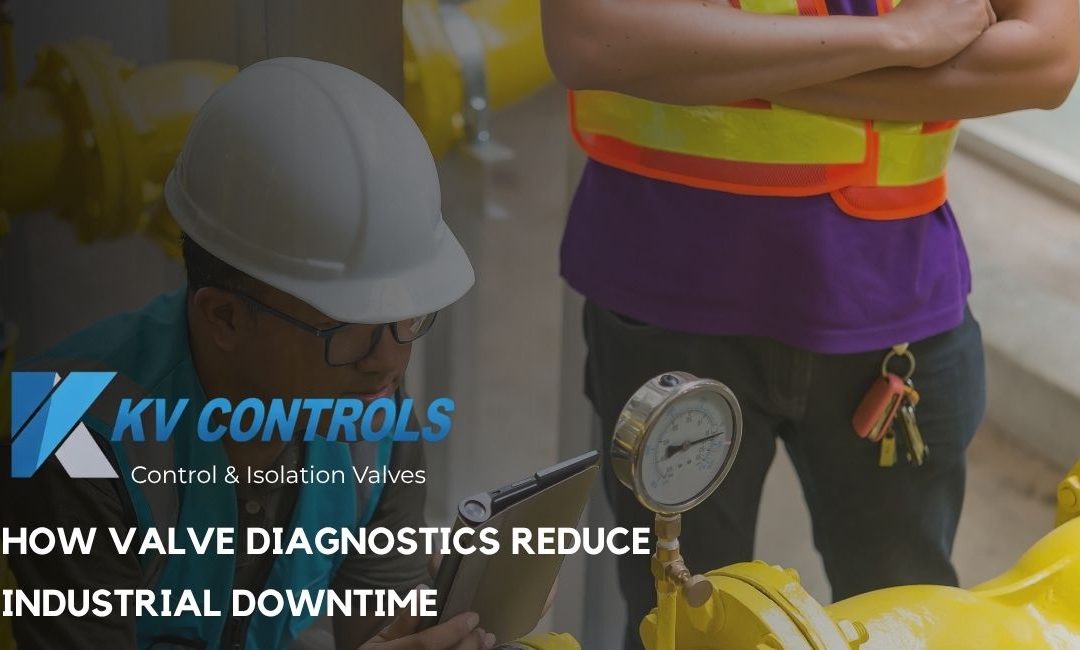
Why Diagnostics Matter in Valve Control
In modern process plants, valve control is no longer only about opening, closing, or modulating flow. It is also about understanding how the valve is performing while it is in service. That is where diagnostics become important.
When engineers and maintenance teams ask why diagnostics matter in valve control, the answer is straightforward: diagnostics help identify problems early, improve maintenance planning, reduce unplanned downtime, and support more stable process performance. In industries such as mining, chemical processing, power generation, pulp and paper, steel, hydrogen, and water treatment, those benefits have a direct impact on plant reliability and operating costs.
A control valve may still appear to be working, but hidden issues can already be developing. Friction, sticking, poor actuator response, air supply issues, signal loss, positioner drift, and seat wear can all affect performance before a complete failure takes place. With the right diagnostic capability, those warning signs can be detected earlier and interpreted correctly.

What Valve Diagnostics Actually Show
Valve diagnostics provide insight into the mechanical and control condition of a valve assembly. This usually includes the valve body, actuator, accessories, and the positioner or control interface. In many cases, advanced digital valve positioners are central to this process because they continuously monitor movement, response, and control behaviour.
Depending on the valve setup, diagnostics may reveal:
- Travel deviation
- Slow response times
- Excessive friction
- Air leakage or supply problems
- Calibration drift
- Stiction and hysteresis
- Incomplete stroke performance
- Cycle counts and duty history
This type of information gives maintenance teams a clearer picture of actual valve condition instead of relying only on visual checks or waiting for failure symptoms to become obvious in the process.
Why Early Fault Detection Matters
One of the main reasons diagnostics matter is that they help detect faults before they cause process disruption. A valve can still move, but not move correctly. It may overshoot, respond slowly, hunt around the setpoint, or fail to reach the intended position under load.
In practical terms, that can lead to:
- Poor flow control
- Higher process variability
- Increased wear on associated equipment
- Product quality issues
- Energy losses
- Unplanned shutdowns
For procurement managers and plant engineers, early fault detection supports smarter decision-making. Instead of replacing equipment too early or reacting too late, the plant can schedule intervention when it is actually needed.
Better Maintenance Planning, Not Just More Maintenance
Diagnostics support condition-based maintenance rather than purely time-based maintenance. That distinction matters. Many plants still service valves according to shutdown intervals or fixed routines, even when the actual operating condition may vary significantly between units.
A valve in light service may not need the same attention as one exposed to slurry, corrosive chemicals, high cycling, cavitation, or steam duty. Diagnostic data helps maintenance teams identify which valves need priority and which can remain in service safely.
This is where a strong valve repair centre becomes relevant in the maintenance strategy. When diagnostics indicate wear, sticking, or degraded performance, the next step is not guesswork. It is targeted inspection, repair, calibration, and return-to-service planning based on actual operating condition.

Diagnostics Improve Control Performance
Valve control quality affects the entire process. A poorly performing valve can create instability in a loop, force operators to compensate manually, and reduce the efficiency of the plant as a whole.
Diagnostics help improve control performance by showing whether the valve can:
- Respond accurately to input signals
- Reach the required position consistently
- Maintain repeatable movement
- Operate without excessive deadband or backlash
- Deliver the control precision expected by the process
This is especially important where process conditions are sensitive and control accuracy matters, such as on globe control valves, severe-duty applications, and automated isolation systems.
Why Diagnostics Matter in Harsh Industries
In South African industry, valves often operate in demanding environments. Slurry lines, steam systems, corrosive media, abrasive solids, fibrous material, and high-pressure services place continuous stress on valve assemblies. In these conditions, diagnostics become more than a convenience. They become a practical reliability tool.
For example, in the mining valve applications space, valves may face abrasive media, high wear rates, and frequent cycling. Diagnostic insight helps maintenance teams identify performance deterioration before it develops into a production problem. The same principle applies in power generation, petrochemical plants, and water treatment systems where process continuity is critical.
The Role of Smart Positioners and Actuation
Diagnostics are closely linked to actuator and positioner technology. Traditional manual inspection still has value, but intelligent valve accessories provide a deeper level of operational visibility.
Where automated valve assemblies are used, the combination of actuators, control accessories, and positioners makes it possible to assess valve health more accurately. That is one reason plants increasingly specify valve actuators and intelligent positioners together as part of a complete control solution rather than as separate components.
By analysing performance data over time, engineers can see whether a problem is caused by the valve trim, the actuator, the instrument air supply, the signal path, or the control settings. That saves time during troubleshooting and supports better root-cause identification.
Diagnostics and Shutdown Risk Reduction
Shutdowns are expensive, especially when a valve issue is only discovered after process performance has already been affected. Diagnostics reduce this risk by helping plants prepare earlier.
Instead of entering a shutdown with incomplete valve condition information, teams can use diagnostics to identify which units need service, which spare parts may be required, and which valves should be prioritised. This improves turnaround planning and reduces the chance of scope growth during maintenance.
An important part of this approach is working with suppliers that maintain recognised quality and safety standards. KV Controls’ ISO 45001:2018 accreditation reflects the structured safety and operational discipline required in industrial support environments.
Diagnostics Support Better Procurement Decisions
Diagnostics are not only useful for maintenance teams. They also support procurement and asset planning.
When plants understand why a valve failed, cycled excessively, or lost control accuracy, they can make better decisions about replacement specifications, trim selection, actuator sizing, and accessory upgrades. That helps reduce repeat failures and improves lifecycle value.
Instead of buying based only on line size and pressure class, buyers can evaluate the real operating demands of the application. In many cases, this leads to better selection of valve type, control accessories, and service support requirements.
For plants reviewing options across multiple applications, the industrial valve product range available from KV Controls provides a useful starting point for matching valve technology to duty conditions.
Diagnostics Should Be Part of the Full Valve Lifecycle
Valve diagnostics should not be treated as an afterthought. They are most valuable when integrated into the full lifecycle of the valve, from specification and commissioning through operation, maintenance, and repair.
That means diagnostics can support:
- Better commissioning checks
- Faster troubleshooting
- Predictive maintenance planning
- Improved shutdown preparation
- Stronger reliability reporting
- Better replacement decisions
For plants that want to review available technical material before selecting or servicing equipment, the valve downloads and technical resources section can assist with product information and reference material.
Why It Matters for South African Plants
In South Africa, industrial operators often work under pressure to extend equipment life, manage maintenance budgets carefully, and reduce avoidable downtime. Diagnostics support all three objectives.
When a valve begins to lose performance, the process usually shows the symptoms before the component completely fails. The value of diagnostics is that they help connect those symptoms to the equipment condition early enough for action to be taken.
For a plant engineer, that means better visibility. For a maintenance manager, it means better planning. For procurement, it means better lifecycle decisions. And for the operation as a whole, it means more dependable control.
If your team is reviewing valve performance, planning maintenance support, or selecting equipment for a new application, speak to KV Controls about the right control, isolation, actuation, and diagnostic-ready valve solutions for your plant.
FAQs:
- What are valve diagnostics?
Valve diagnostics are performance checks and condition insights that help identify mechanical, pneumatic, or control-related issues in a valve assembly. - Why are valve diagnostics important in industrial plants?
They help detect faults early, improve maintenance planning, reduce downtime, and support more stable process control. - Can diagnostics prevent valve failure?
Diagnostics cannot prevent every failure, but they can reveal early warning signs so teams can act before a fault becomes critical. - Which valve components are usually monitored through diagnostics?
Commonly monitored components include the valve body, actuator, positioner, travel movement, response time, and air supply condition. - In which industries do valve diagnostics matter most?
They are especially important in mining, chemical, petrochemical, power generation, pulp and paper, steel, hydrogen, and water treatment applications.
Previous Blog Posts
Top Valve Questions Answered