The Complete Guide for Mining, Mineral Processing, and Industrial Applications
Slurry handling is one of the most demanding challenges in industrial processing. Whether transporting mining tailings, thickened concentrate, pulp stock, ash slurry, or wastewater sludge, conventional valves often struggle to provide reliable shut-off under abrasive conditions.
This is where the slurry knife gate valve excels.
Designed specifically for abrasive, high-solids applications, slurry knife gate valves provide reliable isolation, extended service life, and low maintenance requirements in industries such as mining, mineral processing, power generation, pulp and paper, wastewater treatment, and cement production.
In this guide, we explain what a slurry knife gate valve is, how it works, where it is used, and why it is often the preferred valve solution for slurry applications.
What Is a Slurry Knife Gate Valve?
A slurry knife gate valve is a linear motion isolation valve specifically designed to handle fluids containing high concentrations of suspended solids, abrasive particles, fibres, or sludge.
Unlike conventional gate valves, knife gate valves use a sharpened metal gate that moves vertically through the process media to open or close the flow path. The gate is designed to cut through solids, fibres, and slurry deposits that would prevent many other valve types from sealing effectively.
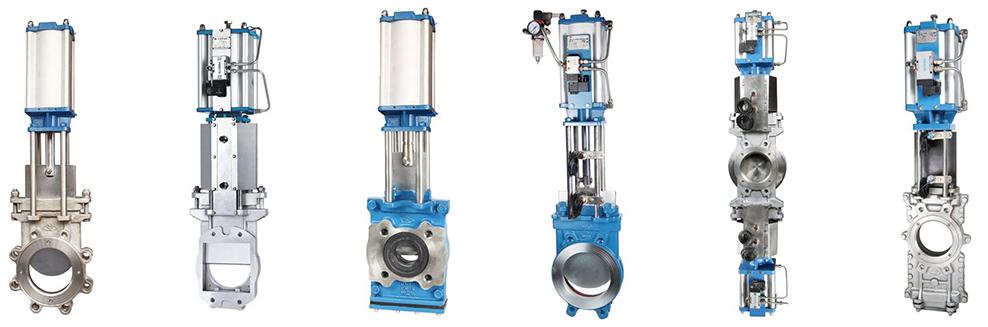
A slurry knife gate valve incorporates additional design features to withstand the harsh operating conditions associated with abrasive media, including:
- Heavy-duty gate construction
- Abrasion-resistant seats
- Full-port flow design
- Cavity-free body construction
- Bi-directional sealing capability
- Replaceable wear components
- Purge and clean-out options
Modern slurry knife gate valves are engineered specifically for severe-service isolation applications where reliability and maintenance costs are critical factors. The KV Controls DK Series Slurry Knife Gate Valve, for example, features a full-port design, abrasion-resistant rubber seat, and cavity-free body to minimise blockage and wear in slurry service.
How Does a Slurry Knife Gate Valve Work?
A slurry knife gate valve operates using a metal gate that moves perpendicular to the flow.
Valve Open Position
When fully open:
- The gate retracts completely from the flow path.
- The full-bore opening allows unrestricted flow.
- Pressure loss is minimised.
- Solids are less likely to accumulate inside the valve.
This is particularly important in slurry systems where material build-up can cause premature failure.
Valve Closed Position
When closed:
- The gate travels downward into the valve body.
- The sharpened edge cuts through solids and fibres.
- The gate compresses against resilient seats.
- A tight shut-off seal is achieved.
High-quality slurry knife gate valves are designed to provide reliable bi-directional sealing even in challenging slurry environments. The DK Series utilises reinforced resilient seats and a cone-shaped gate specifically developed for abrasive slurry applications.
Why Are Slurry Knife Gate Valves Different From Standard Gate Valves?
Traditional gate valves were developed primarily for clean liquid service.
When used in slurry applications, standard gate valves frequently experience:
- Seat erosion
- Solid accumulation
- Incomplete closure
- Increased operating torque
- Leakage
- Premature failure
Slurry knife gate valves address these issues through specialised design features.
Full-Port Flow Path
A full-bore design allows solids to pass through the valve without restriction, reducing wear and minimising pressure drop.
Abrasion-Resistant Seats
Resilient rubber or elastomer seats absorb impact from abrasive particles while maintaining sealing performance. Common seat materials include:
- NBR
- EPDM
- Natural rubber
- Viton
These materials are selected based on temperature, pressure, and chemical compatibility requirements.
Cavity-Free Body Design
Modern slurry knife gate valves eliminate internal cavities where solids can accumulate and harden.
This design significantly reduces maintenance requirements and improves operational reliability.
Cutting Action
The gate’s sharpened profile enables it to cut through fibrous and solid-laden media during closure, ensuring positive isolation.
Industries That Use Slurry Knife Gate Valves
Mining and Mineral Processing
Mining operations represent one of the largest users of slurry knife gate valves.
Applications include:
- Tailings pipelines
- Thickener underflow
- Cyclone feed systems
- Concentrate transfer
- Slurry distribution systems
- Paste fill systems
The abrasive nature of mineral slurries makes specialised valve designs essential for long service life.
Pulp and Paper
Knife gate valves are widely used throughout pulp and paper processing systems.
Applications include:
- Pulp stock handling
- Hydrapulpers
- Gravity separators
- Stock cleaners
- Waste fibre systems
Wastewater Treatment
Municipal and industrial treatment plants use slurry knife gate valves for:
- Sludge handling
- Grit removal systems
- Dewatering equipment
- Digester systems
Power Generation
Power stations utilise slurry knife gate valves in:
- Ash handling systems
- FGD slurry systems
- Bottom ash removal
- Wastewater treatment
Cement and Bulk Materials
Heavy-duty slurry valves are commonly installed on:
- Cement slurry systems
- Lime slurry applications
- Dust collection systems
- Bulk solids transfer equipment
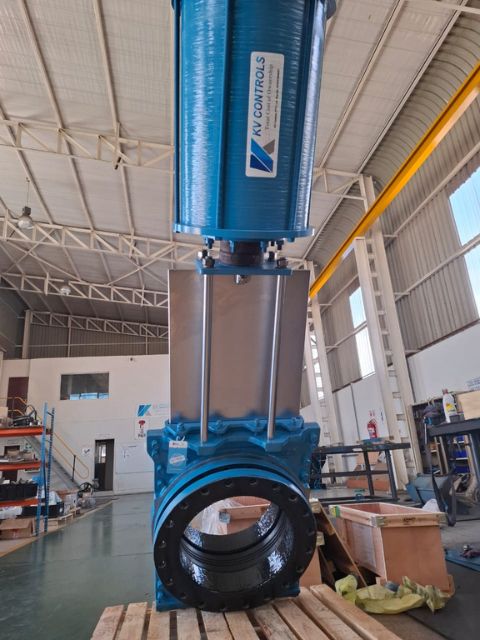
DN450 DH Series Knife Gate Valve – Mining Slurry
DK and DQ Series Knife Gate Valve – Thickener and Clarifier Discharge
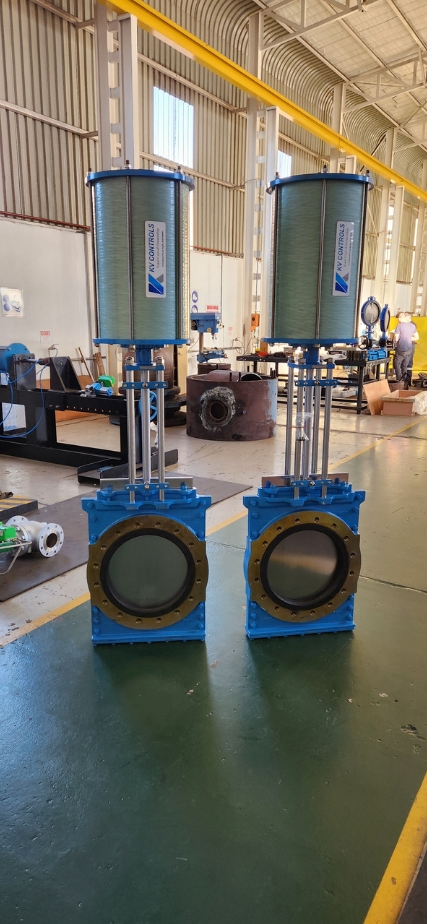
DN400 – DK Series Knife Gate Valve – Waste Water
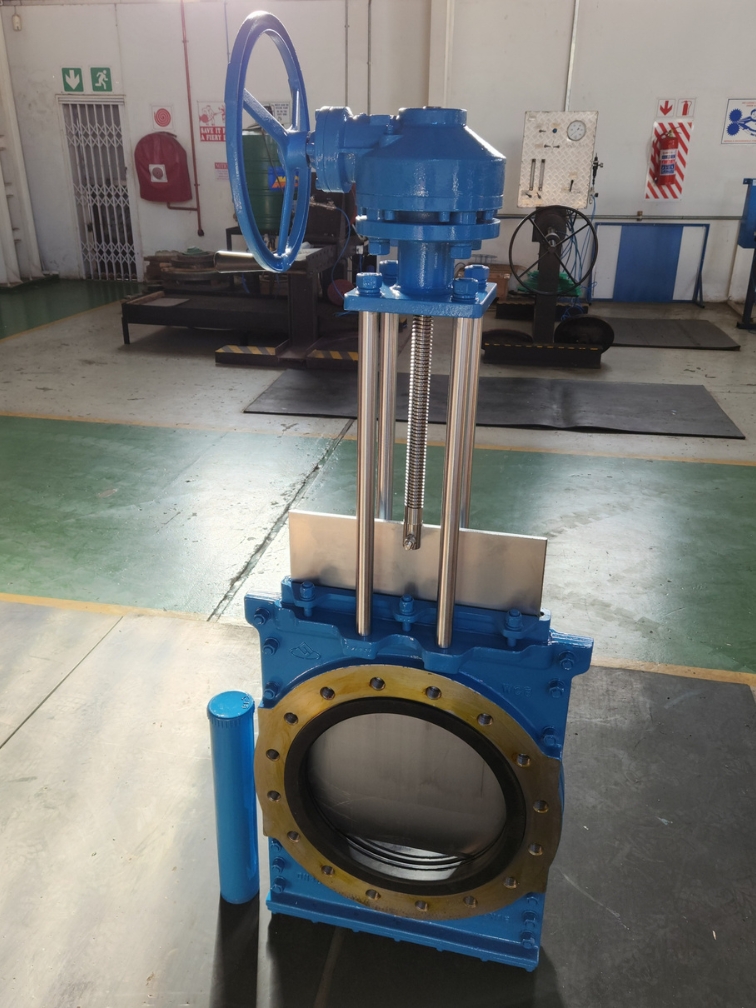
DN400 – DK Series Knife Gate Valve – Mining Slurry Isolation
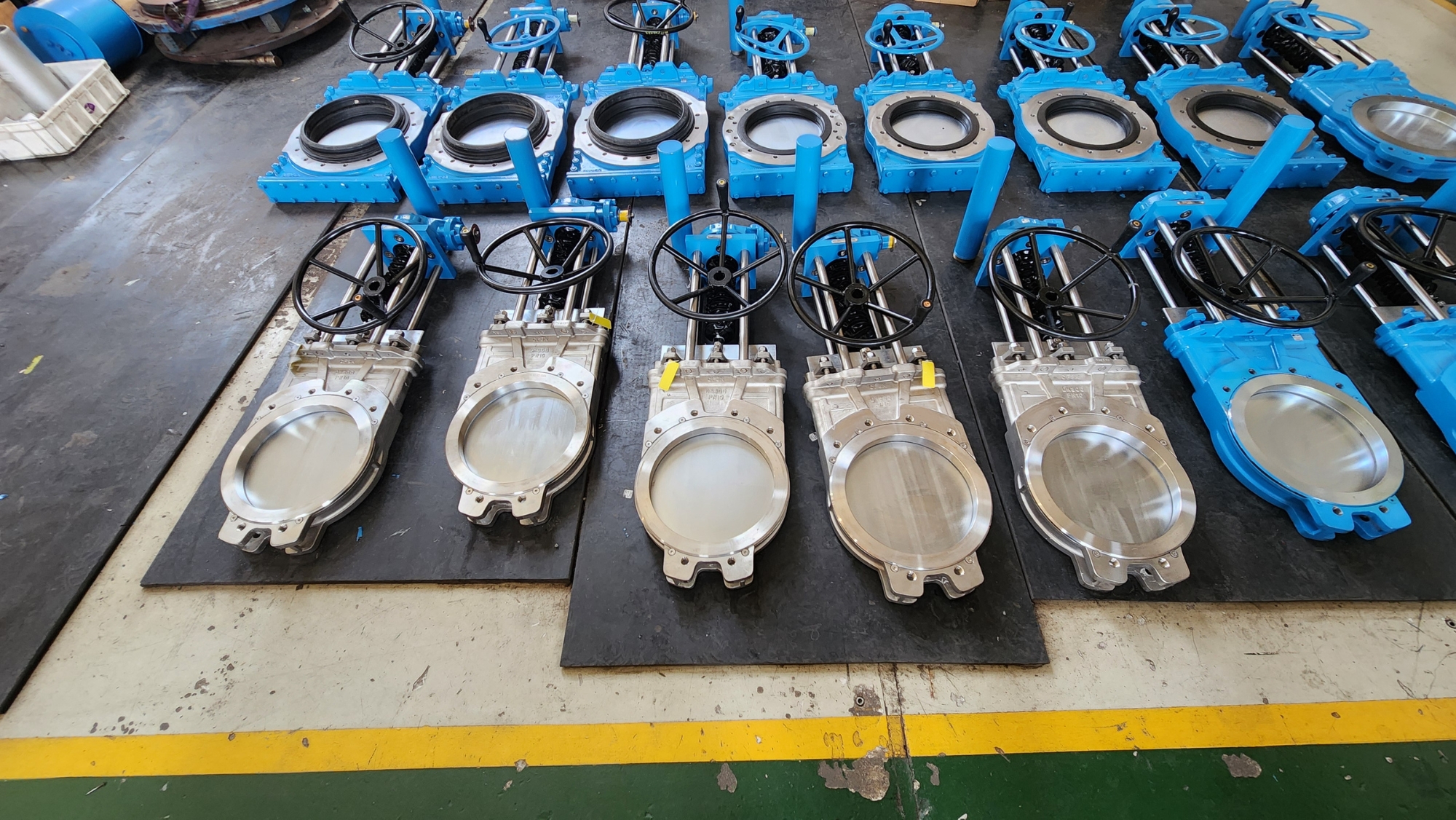
DK and DQ Series Knife Gate Valve – Thickener and Clarifier Discharge
Key Benefits of Slurry Knife Gate Valves
Superior Abrasion Resistance
Designed specifically for abrasive service, slurry knife gate valves typically offer significantly longer service life than conventional valve designs.
Lower Maintenance Costs
Features such as replaceable seats, cavity-free bodies, and removable discharge covers reduce maintenance frequency and downtime.
Reliable Isolation
The combination of resilient seats and precision-machined gates delivers dependable shut-off performance even with high-solids media.
Compact Design
Knife gate valves require less installation space than many alternative valve technologies.
Automation Compatibility
Slurry knife gate valves can be supplied with:
- Manual handwheel operation
- Pneumatic actuators
- Electric actuators
- Hydraulic actuators
This flexibility allows integration into modern automated process plants.
What Features Should You Look For?
When selecting a slurry knife gate valve, consider:
Seat Material
Choose seat materials based on:
- Abrasion level
- Chemical compatibility
- Temperature
- Pressure requirements
Pressure Rating
Ensure the valve pressure class matches system requirements.
Gate Material
Hard chrome-plated stainless steel gates offer improved wear resistance and corrosion protection.
Valve Body Design
A cavity-free body design reduces build-up and minimises jamming risks.
Actuation Requirements
Determine whether manual, pneumatic, electric, or hydraulic operation is required.
Slurry Knife Gate Valves for South African Mining Applications
South Africa’s mining industry presents some of the most challenging slurry conditions in the world.
Gold, platinum, chrome, coal, manganese, iron ore, and diamond processing facilities all require robust isolation solutions capable of handling abrasive slurries continuously.
Selecting the correct slurry knife gate valve can significantly reduce:
- Maintenance costs
- Unplanned downtime
- Leakage incidents
- Spare parts consumption
For severe-service mining applications, heavy-duty slurry knife gate valves with abrasion-resistant seats and hardened gates provide the best long-term performance.
A slurry knife gate valve is a specialised isolation valve engineered for abrasive, high-solids process media. Its cutting gate design, abrasion-resistant seating system, and cavity-free construction make it one of the most effective valve solutions for mining, mineral processing, wastewater treatment, pulp and paper, and other severe-service applications.
By selecting the correct slurry knife gate valve for your process conditions, you can improve reliability, reduce maintenance costs, and extend equipment life while maintaining dependable process isolation.
Need Help Selecting a Slurry Knife Gate Valve?
KV Controls supplies high-performance slurry knife gate valves for mining, minerals processing, pulp and paper, wastewater treatment, and industrial applications throughout South Africa.
Contact our valve specialists for assistance with:
- Valve sizing
- Material selection
- Actuator selection
- Replacement valves
- Mining slurry applications
- Severe-service isolation solutions
FAQS
Q: What makes a slurry knife gate valve different from a standard gate valve?
A: A standard gate valve is generally intended for cleaner service. A slurry knife gate valve is designed for more difficult duties and typically includes features such as a sharpened gate, a cavity-free body, and seat designs better suited to abrasive or solids-laden media.
Q: What industries in South Africa require slurry knife gate valves?
A: Mining and mineral processing, wastewater treatment, pulp and paper, sugar production, chemical processing, and water treatment plants often use slurry knife gate valves where process lines carry suspended solids, fibrous media, or abrasive material.
Q: Why do standard valves fail quickly in slurry service?
A: Slurry can erode seat faces and internal surfaces, while solids and fibrous media may accumulate inside conventional valve cavities or around internal obstructions. These conditions increase wear, restrict closure, and make actuation more difficult over time.
Q: What size range does the Lenor DK Slurry Knife Gate Valve cover?
A: The DK series covers nominal sizes from DN80 to DN800. It is available in pressure classes PN10 to PN16 / ANSI 150LB and operates from -29°C to 100°C.
Q: Can the DK valve be automated?
A: Yes. The Lenor DK valve is available in manual handwheel, gearbox, pneumatic cylinder, and electric actuator configurations, making it suitable for both manual and automated isolation duties.