Segmented Control Valves: The Complete Guide to Choosing the Right Valve for Industrial Flow Control
In industrial process control, selecting the right valve directly impacts production efficiency, operating costs, and equipment reliability. Whether you’re handling water, steam, chemicals, slurry, or abrasive media, choosing a valve that delivers accurate flow control while withstanding demanding conditions is essential.
A segmented control valve is one of the most reliable solutions for these applications. Its unique design provides precise modulation, high flow capacity, and exceptional durability, making it a preferred choice across industries such as mining, chemical processing, oil & gas, power generation, and water treatment.
This guide explains how segmented control valves work, their advantages, applications, and what to consider when selecting one for your process.
What Is a Segmented Control Valve?
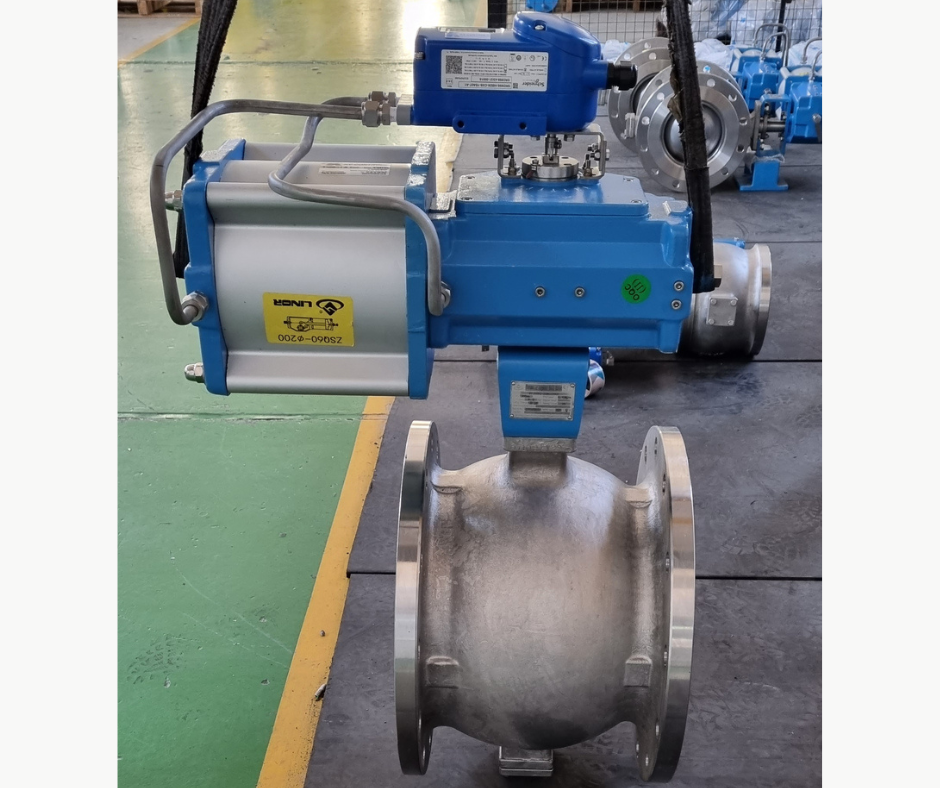
A segmented control valve is a rotary control valve that uses a V-notch segmented ball to regulate the flow of liquids, gases, steam, and slurry.
Unlike conventional ball valves that are primarily designed for on/off service, segmented control valves are specifically engineered for continuous flow regulation. The precision-machined V-notch allows the valve to deliver stable, repeatable control over a wide range of operating conditions.
The rotating ball also creates a self-cleaning action that helps prevent product build-up, making the valve particularly effective in abrasive and fibrous applications.
How Does a Segmented Control Valve Work?
The valve controls flow by rotating the segmented ball inside the valve body.
As the actuator turns the shaft, the V-shaped opening gradually increases or decreases the flow area. This allows operators to achieve smooth, accurate flow control instead of sudden changes in flow.
The valve can be automated using:
- Pneumatic actuators
- Electric actuators
- Smart digital positioners
- PLC and DCS control systems
This makes segmented control valves suitable for both manual and fully automated industrial processes.
Advantages of Segmented Control Valves
- Excellent Flow Control Accuracy
The V-notch design produces an equal percentage flow characteristic, allowing operators to achieve precise control across a wide operating range.
This improves process stability and product quality.
- High Flow Capacity
Segmented control valves offer high flow coefficients (Cv), allowing large volumes of media to pass through with minimal pressure loss.
This reduces energy consumption while maintaining efficient operation.
- Superior Performance in Slurry Applications
Many industrial valves struggle when handling abrasive or slurry media.
The segmented ball continuously wipes across the seat during operation, reducing material build-up and improving reliability.
This makes segmented control valves ideal for:
- Mining
- Mineral processing
- Pulp stock
- Wastewater sludge
- Cement production
- Longer Service Life
The simple rotary design reduces wear on internal components.
Combined with high-quality materials and precision machining, segmented control valves typically require less maintenance than traditional globe valves.
- Lower Maintenance Costs
Reduced wear means:
- Fewer shutdowns
- Lower spare part costs
- Longer maintenance intervals
- Improved plant availability
Common Industrial Applications
Segmented control valves are used in numerous industries where precise flow control is critical.
Mining
Control of slurry, tailings, thickener underflow, and abrasive process fluids.
Water & Wastewater Treatment
Flow regulation in filtration, pumping stations, chemical dosing, and distribution systems.
Chemical Processing
Accurate control of aggressive chemicals, solvents, acids, and process fluids.
Oil & Gas
Reliable control of hydrocarbons, natural gas, utility systems, and process applications.
Power Generation
Steam, cooling water, condensate systems, and auxiliary services.
Pulp & Paper
Excellent performance with pulp stock and fibrous media due to the self-cleaning segmented ball.
What Media Can a Segmented Control Valve Handle?
Depending on the valve design and materials, segmented control valves are suitable for:
- Water
- Steam
- Air
- Natural gas
- Chemicals
- Slurry
- Pulp stock
- Abrasive media
- Fibrous media
- Viscous liquids
How to Choose the Right Segmented Control Valve
Selecting the correct valve requires evaluating several factors.
Process Medium
Understand whether you’re handling clean liquids, corrosive chemicals, slurry, or steam.
Pressure and Temperature
Ensure the valve materials and pressure rating match your operating conditions.
Flow Requirements
Determine the required Cv value to achieve accurate process control.
Actuation
Choose between:
- Pneumatic actuators
- Electric actuators
- Manual operation
based on your automation requirements.
Body and Trim Materials
Common options include:
- Stainless Steel
- Carbon Steel
- Duplex Stainless Steel
- Special corrosion-resistant alloys
Why Choose KV Controls Segmented Control Valves?
At KV Controls, we design and supply segmented control valves that combine precise flow regulation with exceptional durability.
Our valves are built for demanding industrial environments and are available with pneumatic or electric actuators to suit modern automation systems.
Key benefits include:
- Precision flow control
- High flow capacity
- Reliable shut-off performance
- Self-cleaning segmented ball design
- Long service life
- Low maintenance requirements
- Custom configurations for demanding applications
Whether you’re operating a water treatment facility, mining operation, chemical plant, or power station, KV Controls provides reliable valve solutions backed by technical expertise.
FAQs
What is the difference between a segmented control valve and a ball valve?
A standard ball valve is primarily designed for on/off isolation, while a segmented control valve uses a V-notch ball to provide precise throttling and flow control.
Are segmented control valves suitable for slurry?
Yes. Their self-cleaning design makes them highly effective in slurry, abrasive, and fibrous applications.
Can segmented control valves be automated?
Yes. They can be fitted with pneumatic or electric actuators and integrated with PLC, DCS, and smart positioners.
Which industries commonly use segmented control valves?
Mining, water treatment, chemical processing, oil & gas, power generation, pulp & paper, food processing, and manufacturing.
Conclusion
For industries that demand precise flow regulation, reliable shut-off, and long-term durability, segmented control valves offer a proven solution. Their high flow capacity, self-cleaning design, and excellent control characteristics make them ideal for everything from clean water to abrasive slurry applications.
If you’re looking for a valve that improves process efficiency while reducing maintenance and downtime, a segmented control valve is an excellent investment.
Explore the KV Controls Segmented Control Valve range or contact our technical team to find the right solution for your application.