
What Is the Difference Between a Segmented Ball Valve and a Globe Valve?
When selecting a control valve for industrial applications, two common options are the segmented ball valve and the globe valve. While both are widely used for flow control, they differ significantly in design, performance, efficiency, and application suitability.
Understanding these differences helps engineers, technicians, and plant operators choose the most appropriate valve for their specific process requirements.
Design Differences
Segmented Ball Valve Design
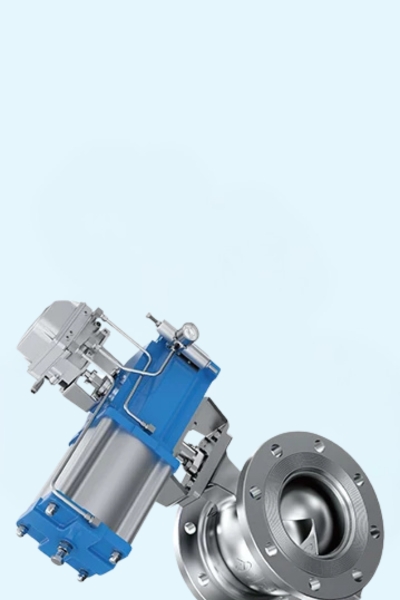
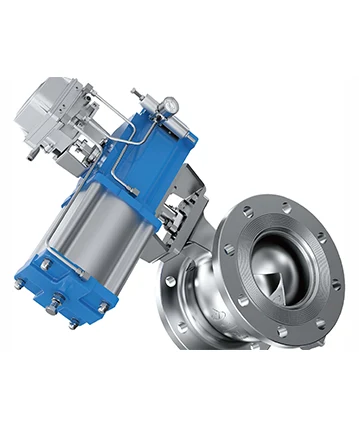
A segmented ball valve features a V-shaped or partially cut ball (segment) that rotates 90 degrees (quarter-turn operation). This design allows for precise throttling and smooth flow modulation.
Key design characteristics:
Quarter-turn rotational movement
V-port segmented ball for controlled flow
Compact design
Typically paired with pneumatic or electric actuators
Globe Valve Design
A globe valve uses a linear motion mechanism, where a plug moves up and down to regulate flow through the valve seat.
Key design characteristics:
Linear movement (not rotational)
S-shaped internal flow path
Larger and heavier construction
Typically operated by manual handwheel or motorized actuator
Flow Control Performance
Segmented Ball Valve – Superior Throttling
Segmented ball valves provide excellent flow control, especially at low to medium flow rates. The V-shaped ball design allows for gradual and predictable flow changes, making them ideal for automated process control systems.
Advantages:
More accurate flow modulation
Lower pressure drop
Smooth and stable control
Suitable for slurries and viscous fluids
Globe Valve – Traditional Control Valve
Globe valves are also effective for throttling but generally cause higher pressure loss due to their internal flow path.
Characteristics:
Good flow control
Higher turbulence
Greater pressure drop
Better suited for clean fluids
Pressure Drop Comparison
One of the biggest differences between these two valves is pressure loss.
Segmented Ball Valve: Low pressure drop due to a more streamlined flow path.
Globe Valve: Higher pressure drop because the fluid must change direction inside the valve.
This makes segmented ball valves more energy-efficient in many applications.
Suitability for Different Media
Segmented Ball Valve Best For:
Slurries
Abrasive fluids
Viscous liquids
Gases and steam
Dirty or contaminated media
Globe Valve Best For:
Clean water
Steam control
Non-abrasive liquids
Applications requiring very fine control at low flow rates
Maintenance and Durability
Segmented Ball Valve
Lower maintenance requirements
Fewer internal parts subject to wear
More durable in harsh environments
Globe Valve
Requires more maintenance due to wear on seat and plug
More prone to leakage over time
Generally higher maintenance costs
Size and Installation
Segmented Ball Valve: More compact and lightweight, making installation easier.
Globe Valve: Bulkier and heavier, often requiring more space and structural support.
Which Valve Should You Choose?
Choose a segmented ball valve if you need:
Precise flow control
Low pressure drop
Better performance with slurries or dirty fluids
Automated control with actuators
Choose a globe valve if you need:
Very fine control at low flow rates
Reliable performance with clean fluids
Traditional control valve design
Conclusion
While both valves are effective in industrial flow control, segmented ball valves generally outperform globe valves in terms of efficiency, durability, and suitability for harsh media. Globe valves, however, remain a strong option for clean fluid applications requiring precise linear control.
Selecting the right valve depends on your specific application, media type, pressure conditions, and control requirements.
FREQUENTLY ASKED QUESTIONS (FAQ)
Q1: Which valve is better for throttling — segmented ball or globe?
A segmented ball valve is generally better for throttling in most industrial applications because it offers smoother control, lower pressure drop, and better performance with slurries and viscous fluids.
Q2: Does a globe valve last longer than a segmented ball valve?
Not necessarily. Globe valves tend to experience more wear due to their linear plug-and-seat design, while segmented ball valves are typically more durable and require less maintenance.
Q3: Can a segmented ball valve replace a globe valve?
In many applications, yes. Segmented ball valves can often replace globe valves, especially where lower pressure drop, better efficiency, and handling of dirty fluids are required.
READ MORE;
Segmented Ball Valves Explained
Uses of Segmented Ball Valves – kv control
ACTUATORS
ARC VALVES
BALL VALVE
BUTTERFLY VALVE
DESUPERHEATER
DIAPHRAGM VALVE
GLOBE CONTROL VALVE
GATE, GLOBE & CHECK
KNIFEGATE VALVE
PLUG VALVE
POSITIONERS
SAFETY VALVE
SEGMENTED BALL VALVE
SOLENOID VALVE